
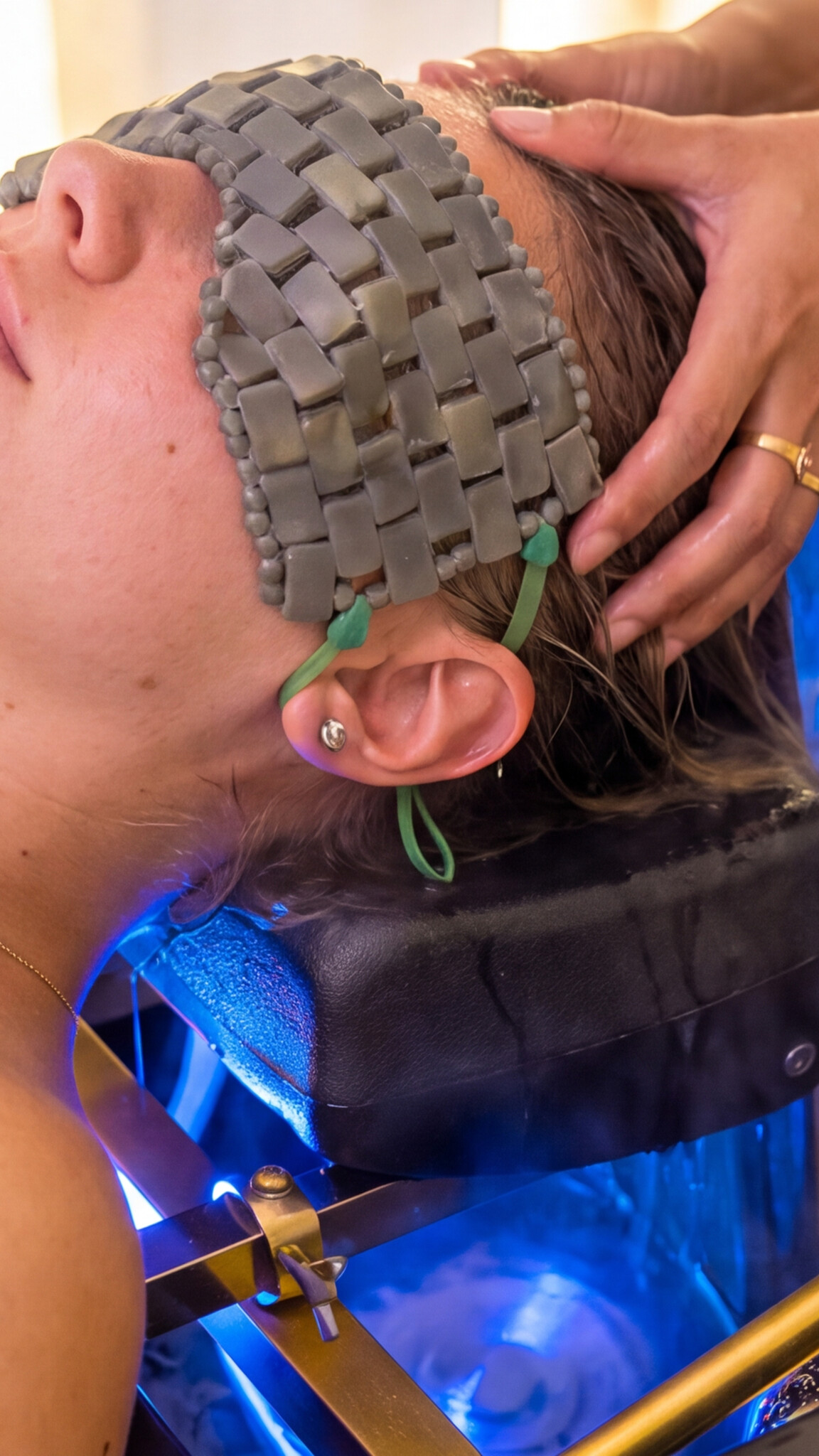
Hair restoration is not one-size-fits-all. Genetics, aging, hormonal changes, stress, nutrition, medications, and the hair-growth cycle can all contribute to thinning, which is why the right starting point is an evaluation, not a product promise.
Why hair thins
Your provider may review the pattern and history of hair loss, medications and supplements, lifestyle or hormonal changes, scalp health, previous treatments, and your goals. Some patterns may need additional medical evaluation or a different treatment path.
What scalp-focused support means
A scalp-focused hair plan looks at the scalp and the environment surrounding the follicle. Exosomes are extracellular vesicles involved in cell-to-cell communication, and researchers are studying their potential role in that environment. Exosome products are not FDA approved to treat hair loss, results vary, and treatment should be discussed under medical oversight.
Scalp microneedling creates controlled micro-channels and activates a repair response. When appropriate, a provider may include it in a personalized plan, sometimes with an exosome-based product. Neither the procedure nor the product guarantees regrowth.
Who may be a candidate
Adults concerned about early thinning, shedding, density, or scalp health may start with a consultation. The cause, health history, scalp findings, and expectations determine whether scalp-focused support is appropriate.
Timelines and realistic expectations
Hair grows slowly. Progress is evaluated over months, not days, and may be documented with standardized photographs and clinical reassessment. Your provider will explain when a change can reasonably be evaluated.
Common questions
Are exosomes FDA approved for hair loss?
No. Exosome products are not FDA approved to treat hair loss, and results vary.
How soon will I see results?
Hair-growth cycles take time. Your provider will set an individualized reassessment timeline rather than promise an immediate result.